Results for Mammography Clinics
Displaying posts 1 - 10 of 77 in total- Type:
- Businesses
- Blogs

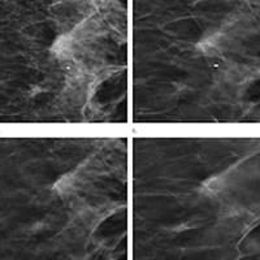
Adding tomosynthesis to digital mammography for breast cancer screening reduces recall rates by 37%, with the technique recording better performance for certain types of breast abnormalities, according to a new study in the January issue of Radiology.

Mammography may be an excellent way to test women for cardiovascular disease at the same time as screening for breast cancer because it identifies breast arterial calcifications, which have been linked to cardiovascular disease risk, according to a study published online August 11 in the European Journal of Radiology.

Tied to the rise of technology and the women's rights movement, the story of mammography is a touchstone for the history of cancer screening and care.
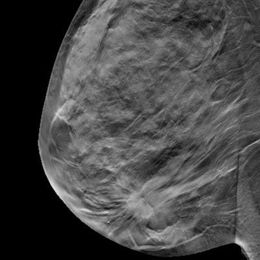
More and more clinical evidence indicates that using digital breast tomosynthesis (DBT) for breast cancer screening reduces recall rates and increases the detection of invasive cancers. Now another benefit of the technology is coming to the fore: Adding DBT to digital mammography helps breast imagers categorize lesions more accurately, according to research presented at ECR 2017.

Screening with digital breast tomosynthesis (DBT) boosts specificity compared with 2D mammography and also finds more cancers, particularly those associated with better prognoses, according to a study published online February 28 in JAMA Oncology.

An artificial intelligence (AI) tool can accurately and consistently classify breast density on mammograms, according to a new study.

A new study has found a media campaign designed to raise awareness of the link between alcohol and cancer was associated with an increase in support for alcohol-related control policies. Whilst based on findings from a Danish campaign, the study...

Breast-cancer screening with three-dimensional imaging finds more invasive cancers and yields fewer false alarms than standard digital mammograms alone, according to a large new study in the Journal of the American Medical Association.
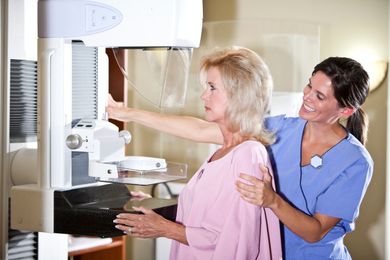
Imaging tools such as MRI and contrast-enhanced digital mammography will play an increasingly important role in screening women for breast cancer

Bias can lead doctors to dismiss women’s health problems. Here’s how to get the care you need.
